The Abbey of Monte Cassino, Frosinone

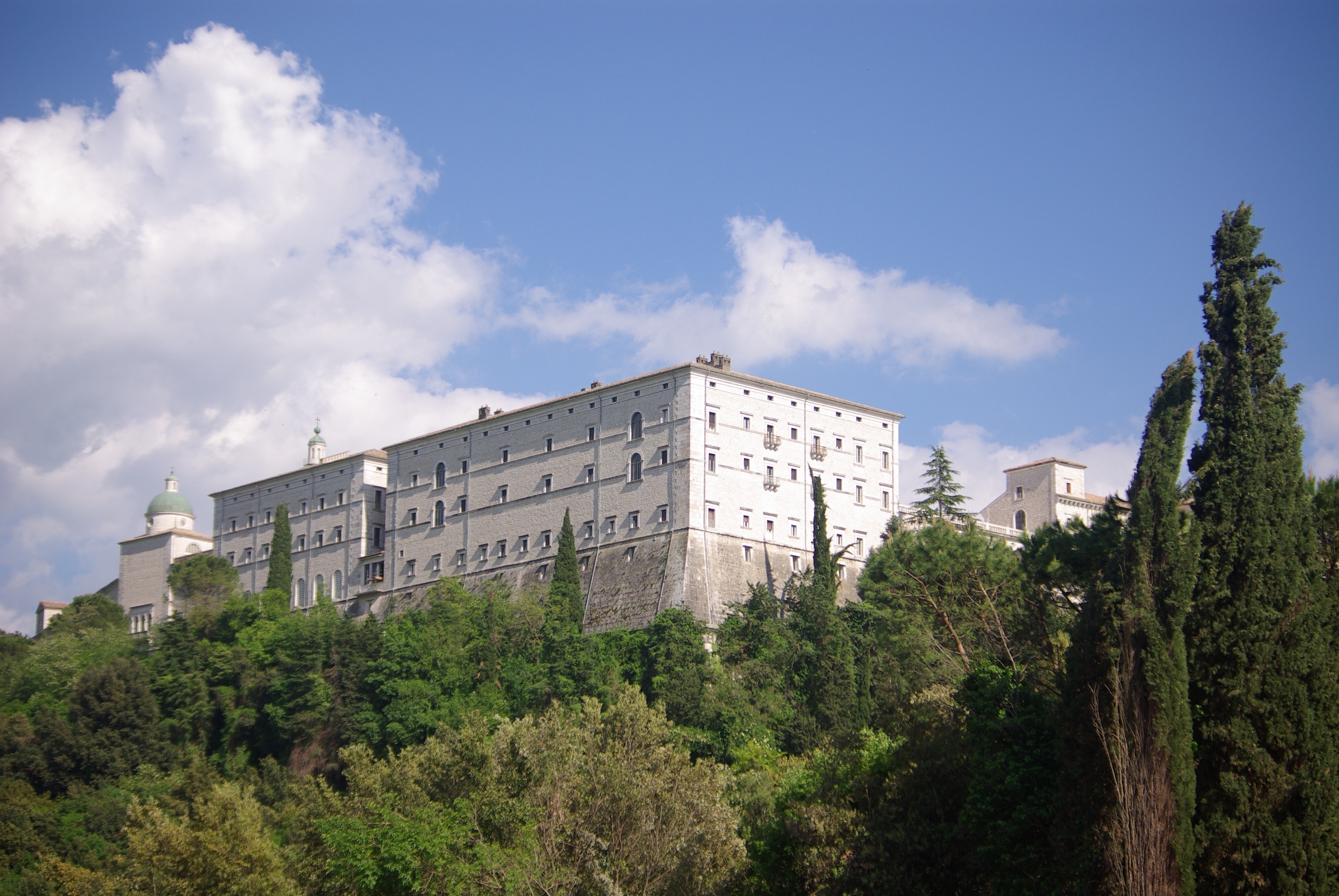
The Abbey of Monte Cassino, located on top of a very large hill in the town of Cassino in the province of Frosinone, was founded by St. Benedict in 528 AD and is home to his sacred relics, along with those of his sister, St. Scholastica. It is considered to be the birthplace of monasticism in Western Europe.

The abbey has been destroyed and rebuilt many times due to barbarian invasions and natural disasters, and was the site of a very important battle during WWII between Allied forces and German soldiers due to its strategic location. After being destroyed by the Allies during WWII, it was rebuilt and reconsecrated in 1964 by Pope Paul VI. Today it is a monastery and museum, and includes a large cemetery of Polish soldiers killed during WWII while trying to liberate Italy.
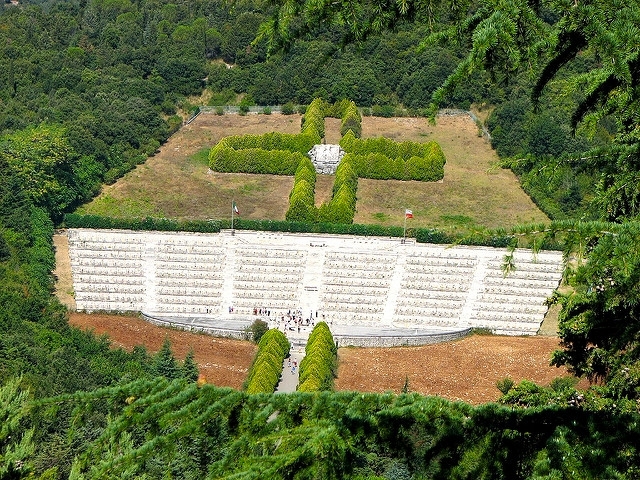
Monte Cassino Cemetary for Polish soldiers who died defending the abbey during WWII

Monte Cassino Cemetary for Polish soldiers who died defending the abbey during WWII

Monks living in the monastery live by two basic principles:  pray and work. All members of the monastery community have an important job to do. Their duties include receiving visitors, organizing events, maintaining the libraries and archives, binding books, growing herbs for their on-site pharmacy, and tending to its vineyard.
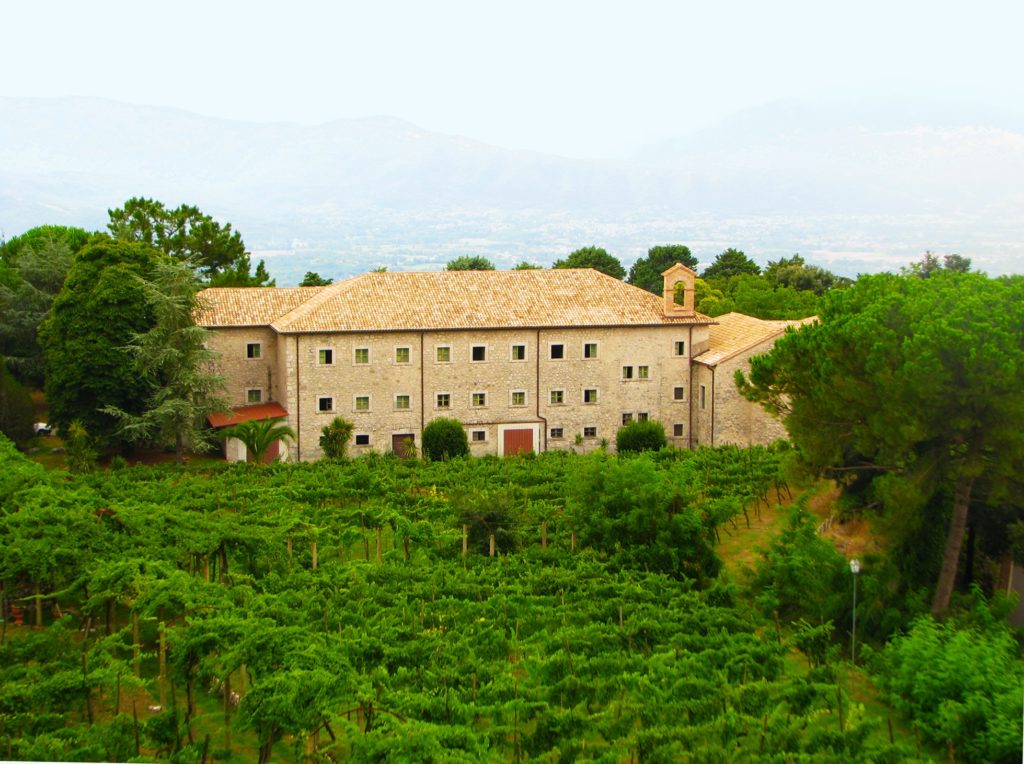
Monte Cassino Vineyard

Vineyard

Was the destruction of the Abbey during WWII due to an error in translation?

According to an account by Colonel David Hunt found in the book With Alex at War, the autobiography of Sir Rupert Clarke, the bombardment of the Abbey by the Allies was due to a misinterpretation of an intercepted radio message by a British junior officer. The officer mistook the word “abbot” for a similar word in German meaning “bombardment”. By the time Colonel Hunt realized this error, it was too late and the American forces bombed the mountain top, something that both sides had promised the pope they would never do, killing hundreds of refugees that were taking shelter there. Miraculously, the abbot and monks were saved.
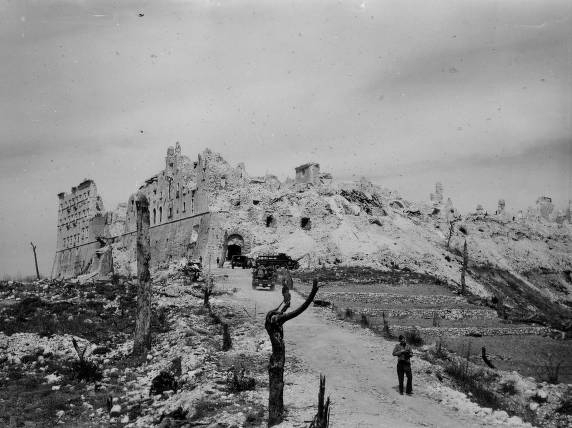
Montecassino - WWII

Monte Cassino after being destroyed during WWII

Monte Cassino Abbey Today

The monks that live in the abbey live each day according to St. Benedict’s Rule, regulations and guidelines written by him in the 6th century, which describes every aspect of monastic life and encourages love, prayer, work, respect, chastity, moderation, and community. The monks are known as cenobites, living in a religious community, rather than in isolation, under a leader, the abbot.

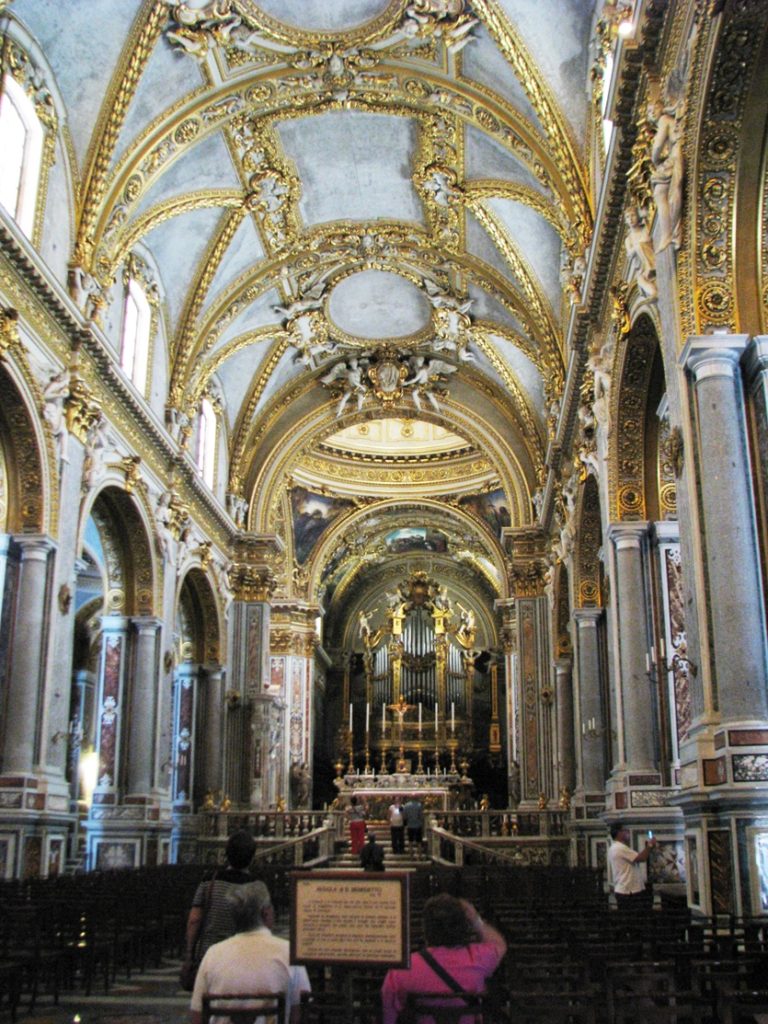
The cathedral that stands here today is actually the 4th church to be built on this site. What little was left of the cathedral before it was destroyed during WWII can be found incorporated in the structure and in its museums.
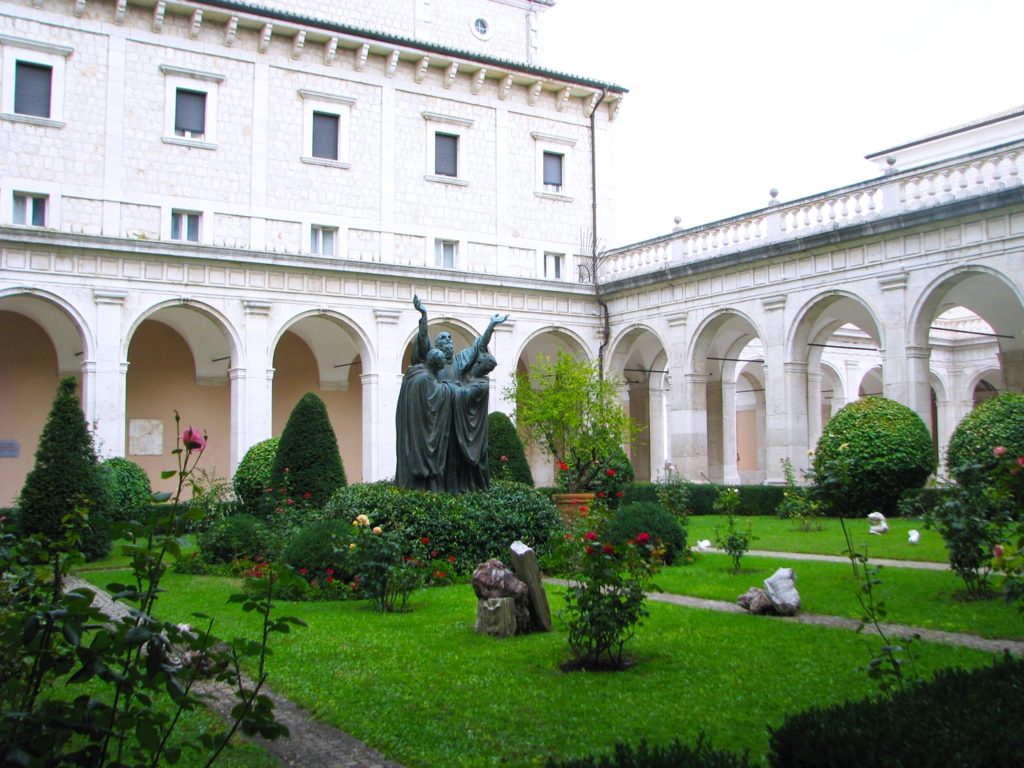
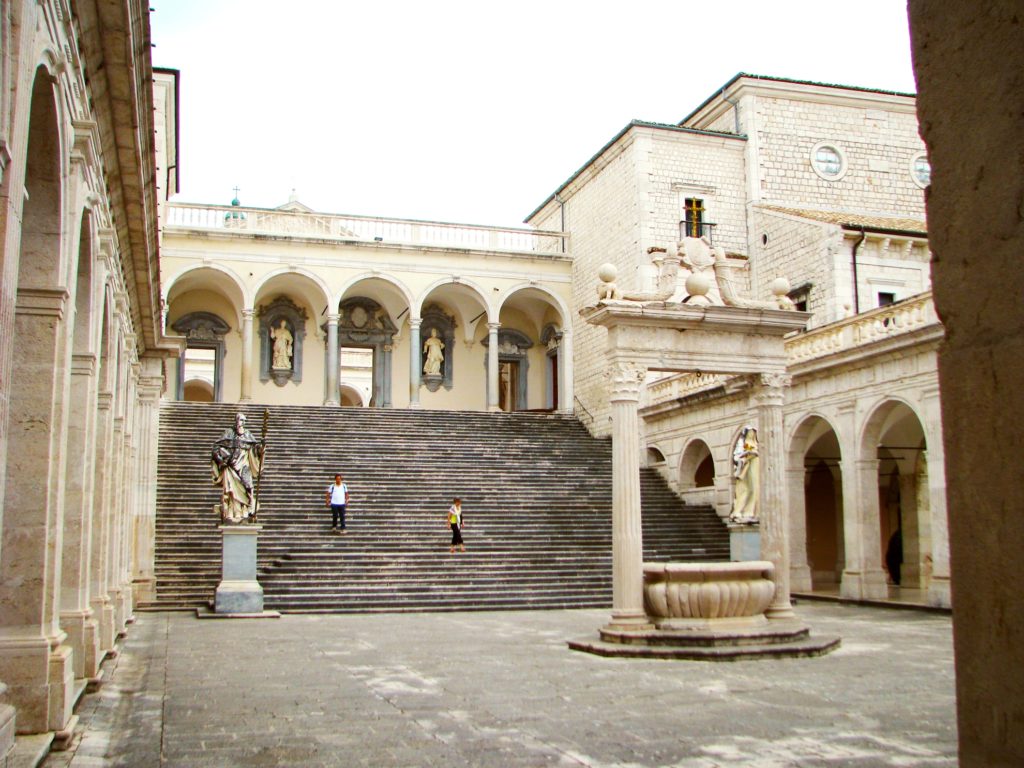
Monte Cassino Courtyard with statue of St. Benedict receiving Holy Communion
Courtyard with statue of St. Benedict receiving Holy Communion

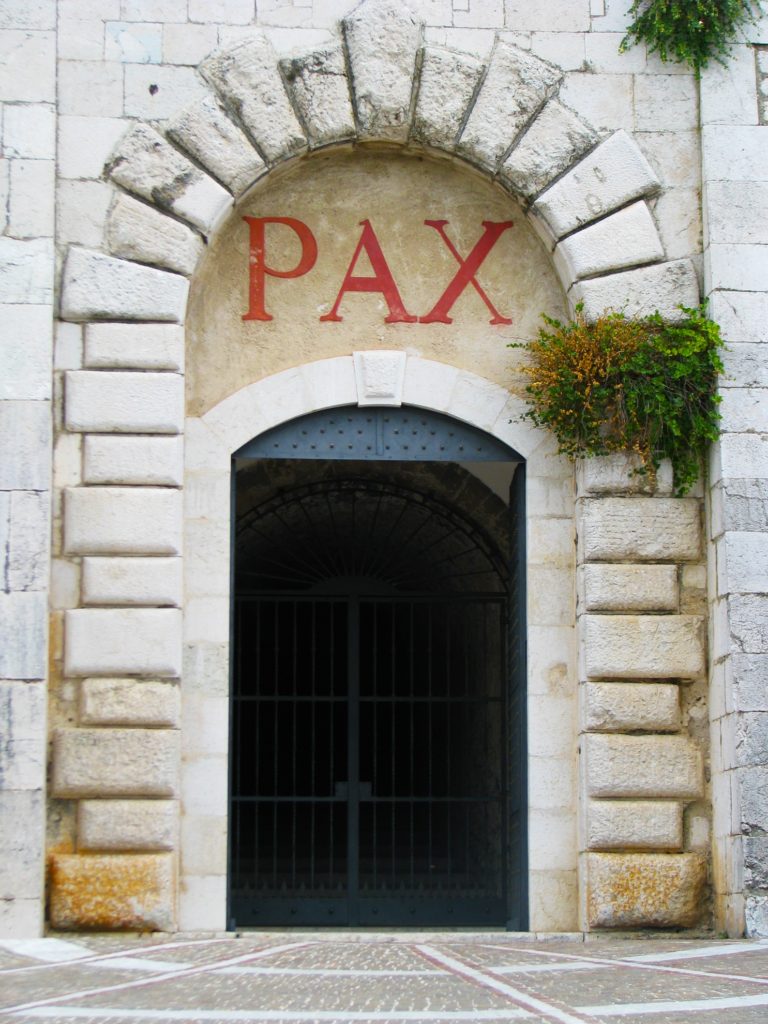
Monte Cassino Doorway of Peace (PAX)

Doorway of Peace (PAX)

Monte Cassino cloisters

Cloisters

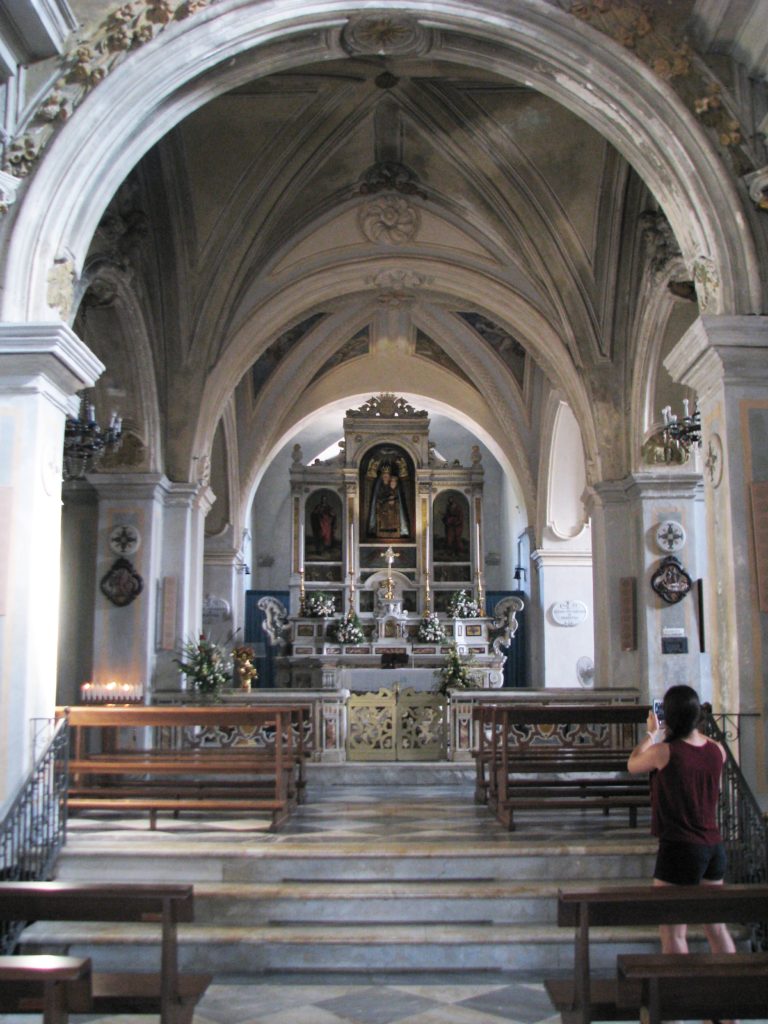
One of the many chapels in the Abbey of Monte Cassino
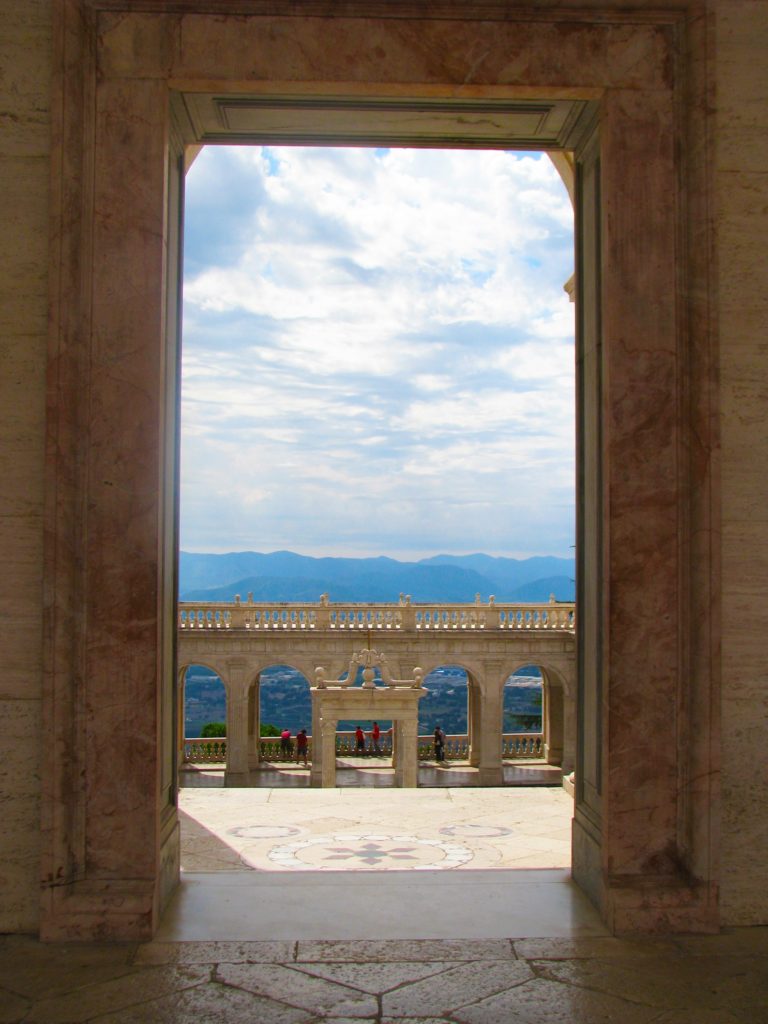
One of the many chapels in the Abbey of Monte Cassino

View of Cassino from Monte Cassino
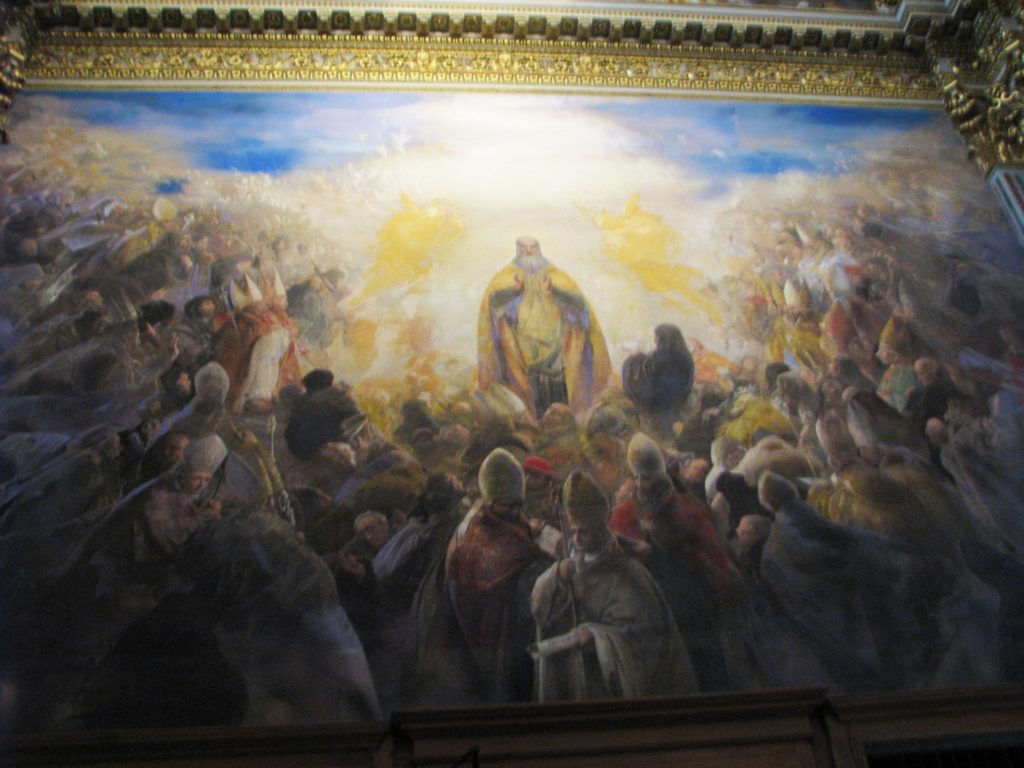
View of Cassino from Monte Cassino

Fresco of St. Benedict
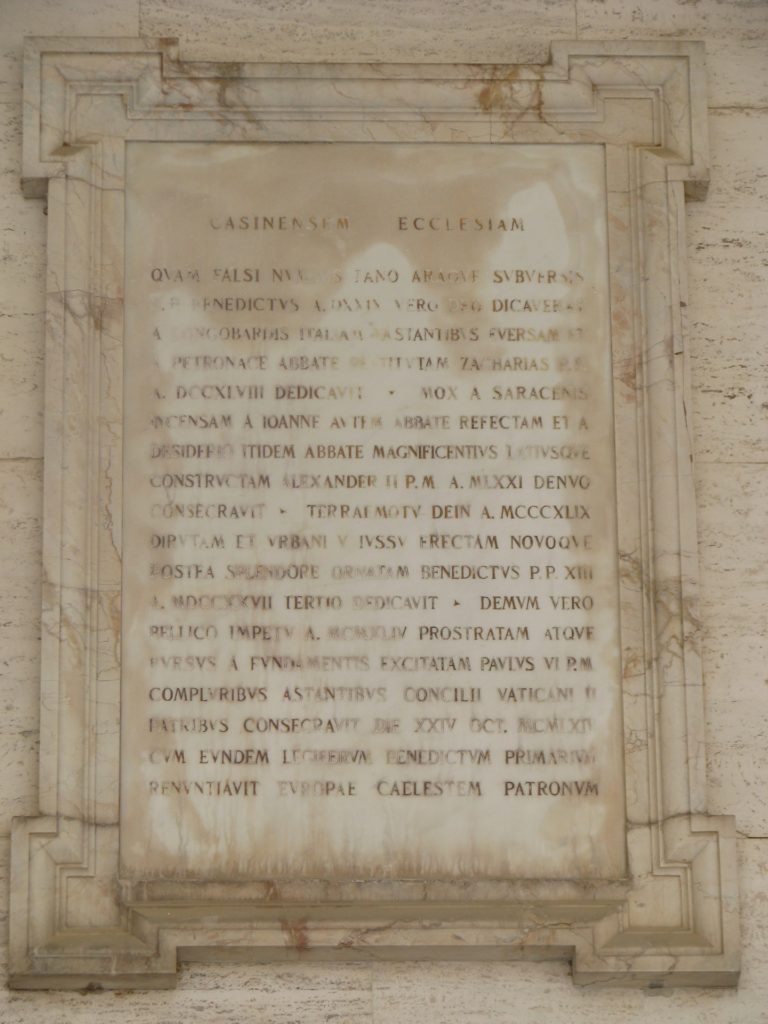
Fresco of St. Benedict

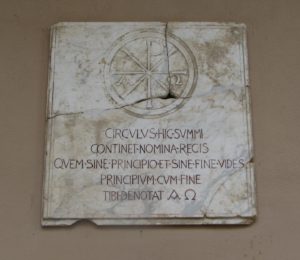
Latin Text found in the Abbey of Monte Cassino

Latin Text

Latin Text found in the Abbey of Monte Cassino

Latin Text

If you plan to visit during the warmer months, please be advised that, as with all churches, basilicas, etc., you will not be allowed in wearing shorts or sleeveless shirts.

To purchase tickets online, go to Abbazia di Montecassino.

Join my mailing list so that you can have new posts delivered right to your inbox!

Top photo credit: William Piccolino
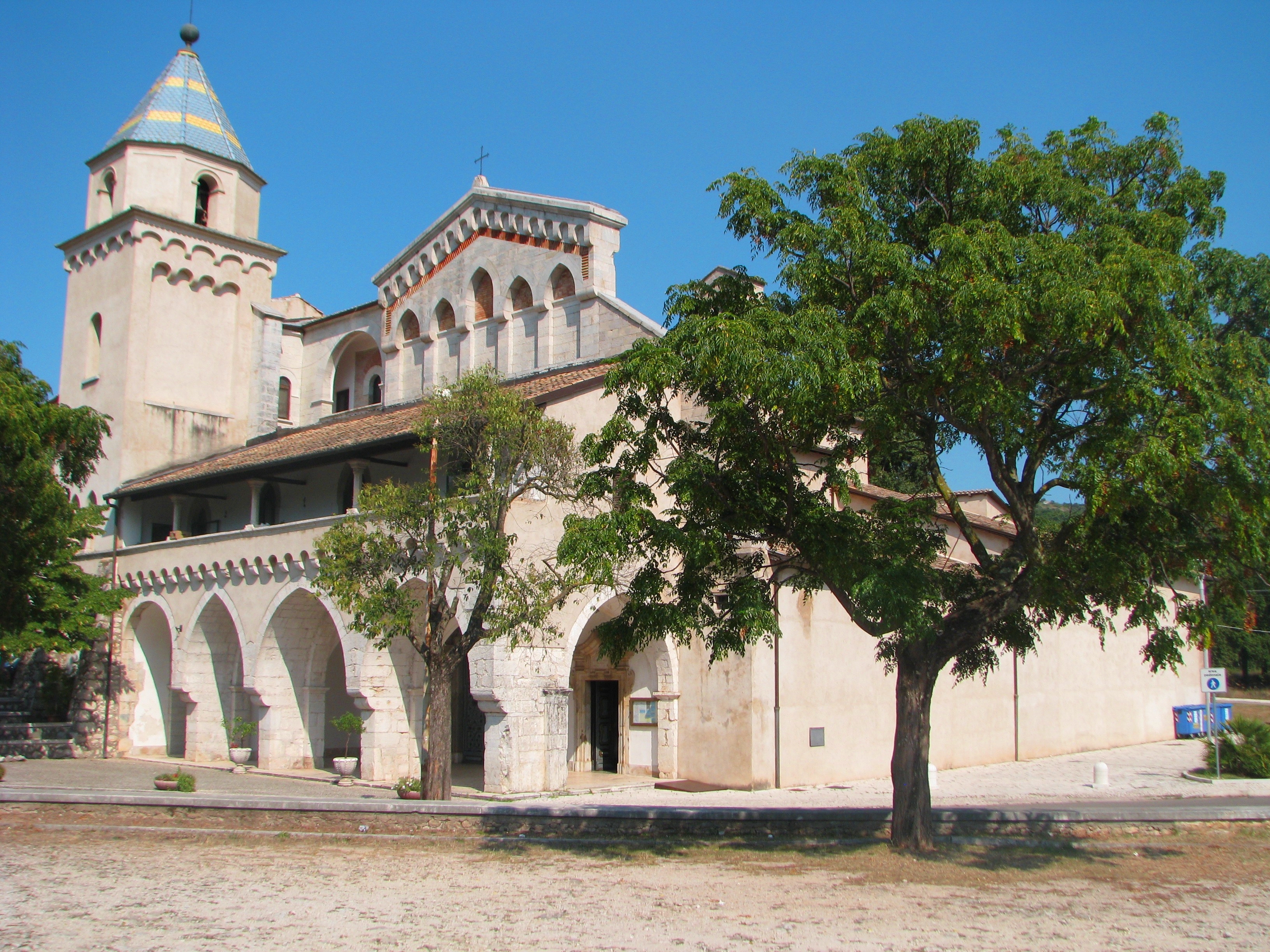
The Sanctuary of the Madonna del Piano, Ausonia

The Sanctuary of the Madonna del Piano (Madonna of the Plain) is a Roman Catholic Church in the town of Ausonia in the Province of Frosinone built during the 15th century in place of the original structure that existed here.

According to one legend, San Giorgio slayed a dragon in this very spot, but the most widely accepted story about why this church was built here dates back to the 12th century. According to tradition, there used to be a small lake here where the locals would throw babies that were born deformed. One day a young shepherd girl named Remingarda was walking nearby and the Virgin Mary appeared to her and asked her to tell the people to stop this practice and instead build an orphanage as penance for what they had been doing. When the townspeople went to the site where the girl said she had the vision, they were instructed on how to build the orphanage by ants that appeared and began to draw an image on the site.

The Altar of the Sanctuary of the Madonna del Piano

The altar of the Sanctuary of the Madonna del Piano

Villa d’Este, Tivoli

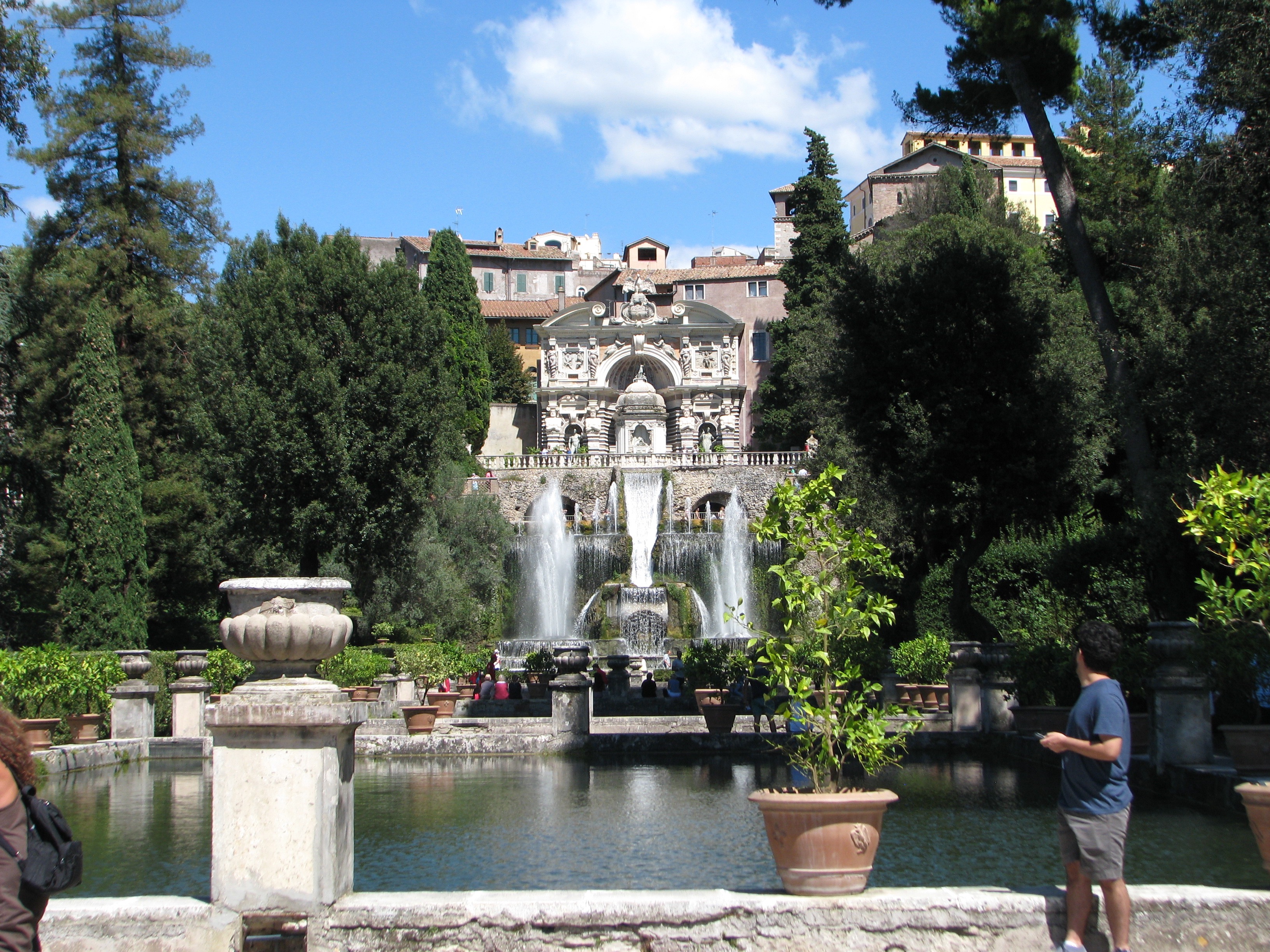
Villa d’Este, also known as Tivoli Gardens, is a UNESCO world heritage site in the town of Tivoli which is just outside the city of Rome. It was commissioned during the Renaissance by Cardinal Ippolito II d’Este, governor of Tivoli in 1550, after being disappointed that he was not elected to the papacy. He wanted to build a residence which would rival all the Roman villas so he acquired a lot of land surrounding the governor’s official residence, which was originally a monastery and had a magnificent view of the countryside.

Villa d'Este, Tivoli

Villa d’Este

In the process of building this luxurious villa, many houses, roads, and buildings were demolished causing many lawsuits to be brought against him, but he continued. He commissioned Pirro Ligorio, an artist and scholar who studied the many Roman villas in the surrounding area, to plan this new villa and garden in the Baroque style (and also used many objects of art taken from Hadrian’s Villa nearby), architect Alberto Galvani to design the blueprints, many engineers to design and construct the fountains, and many painters and sculptors to adorn it.

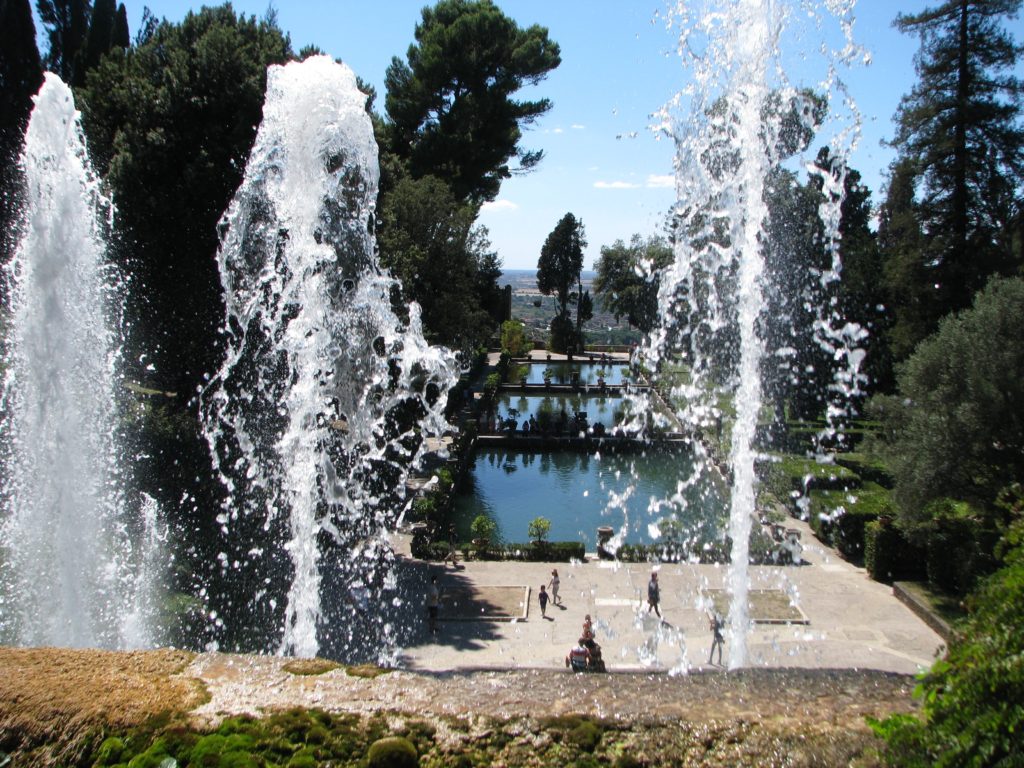
View through the Fountain of Neptune,Villa d'Este

View through the Fountain of Neptune

Because of the steep slope of the land where it was built, a large amount of dirt had to be excavated to construct terraces and canals to carry water from the Aniene river to the fountains through underground pipes.

One of the fountains is actually a hydraulic organ which plays music by pushing air through the organ pipes.

Sometime between the 18th and 19th century, the villa was abandoned but was later restored and is now one of the most visited sites in the world.

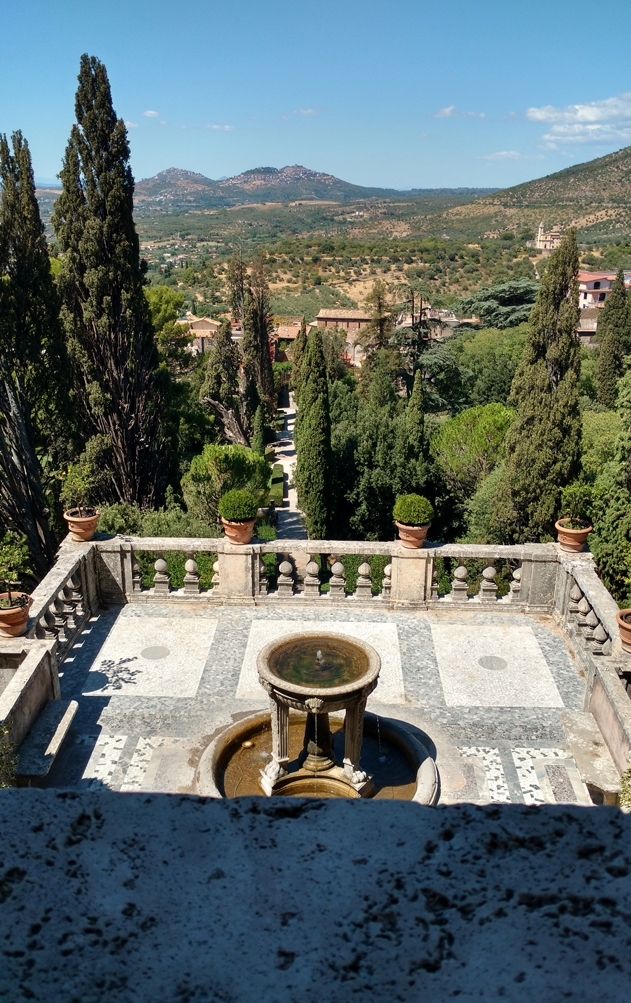
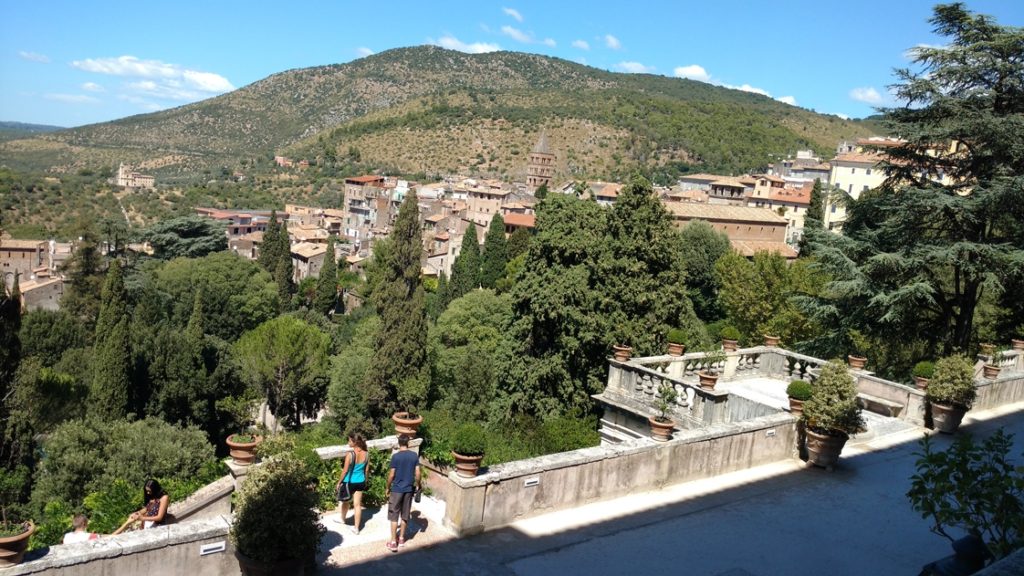
View from one of the terraces of the gardens of Villa d'Este

View from one of the terraces of the gardens of Villa d’Este

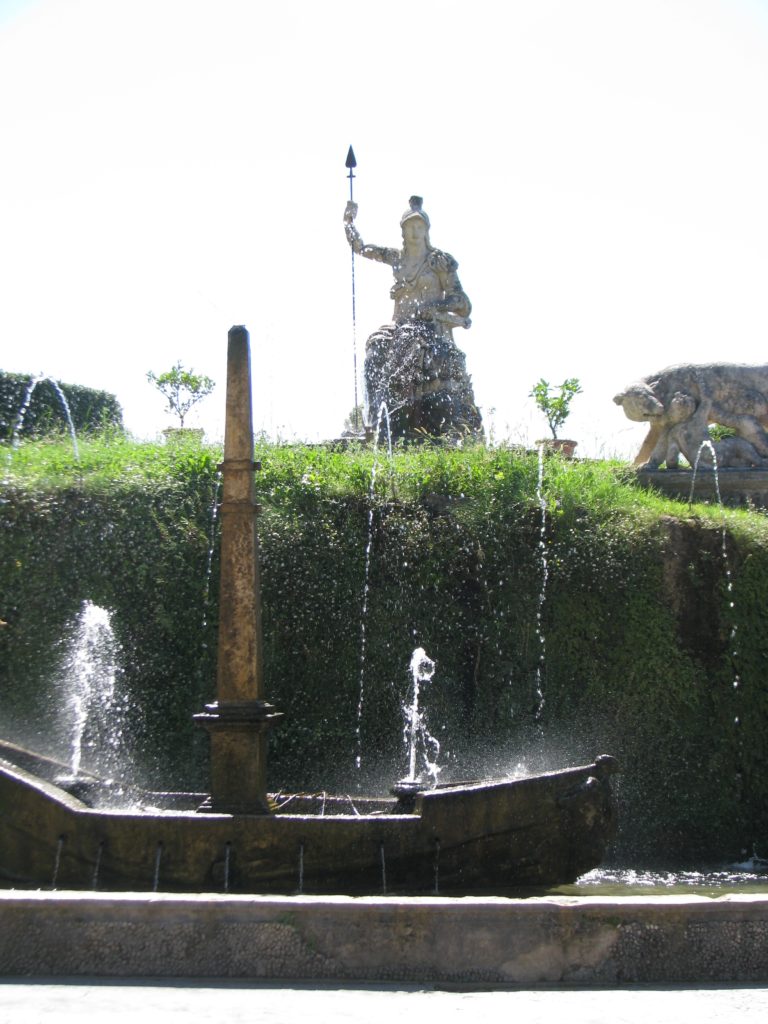
The Fountain of Rometta, representing the founding of Rome

The Fountain of Rometta, representing the founding of Rome

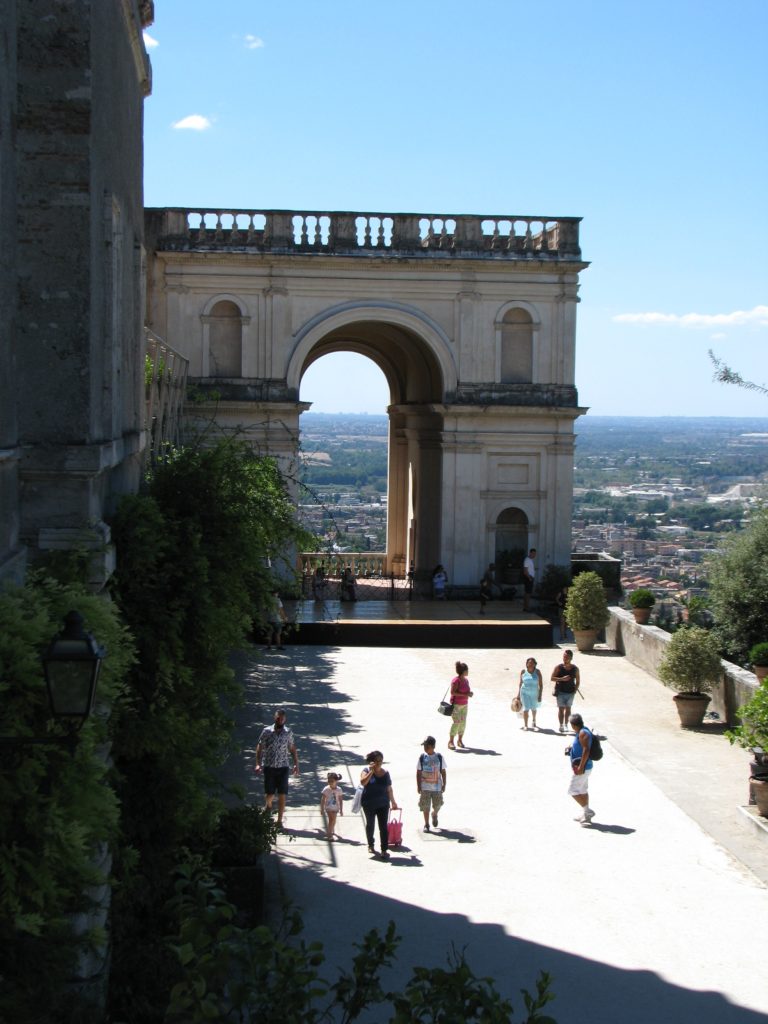
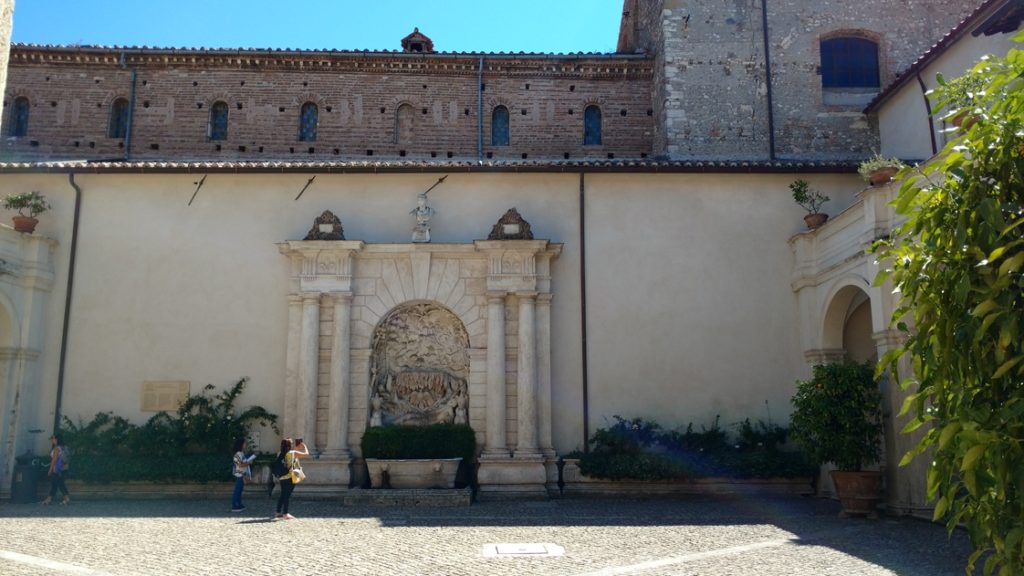
Courtyard, Villa d'Este

Courtyard

View from a window, Villa d'Este

View from a window

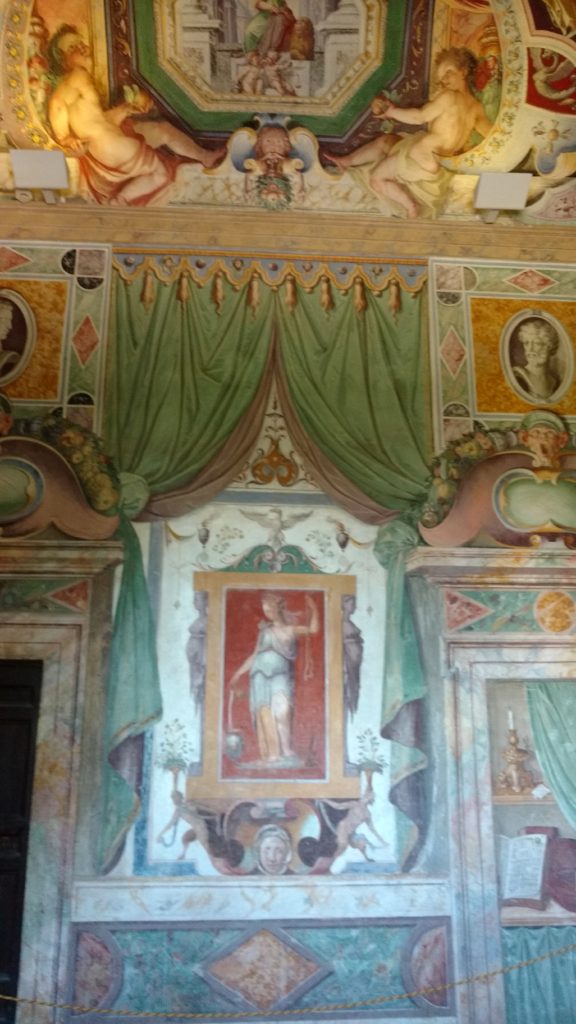
Fresco in the Hall of Glory, Villa d'Este

Fresco in the Hall of Glory

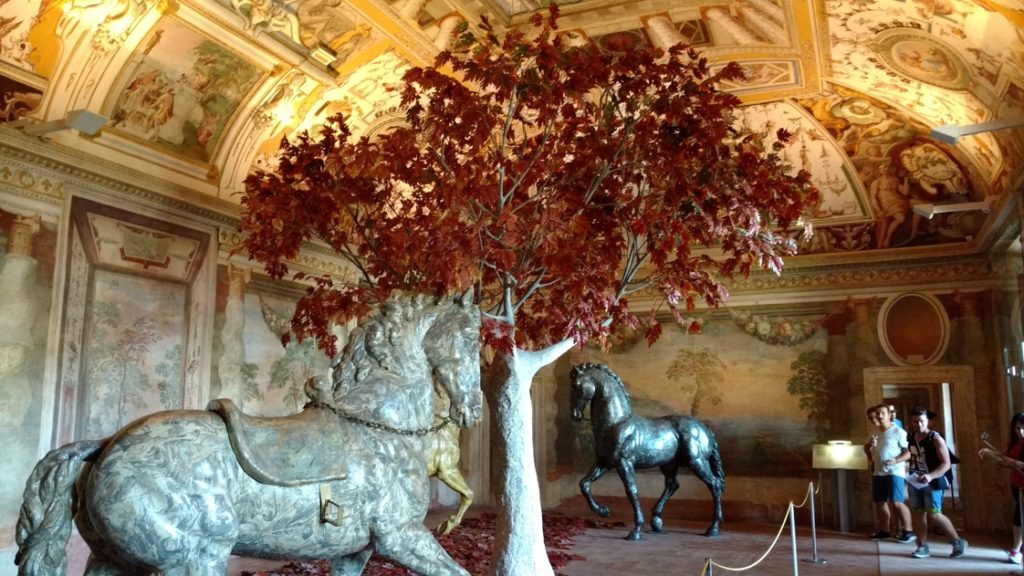
The "Hall of Horses", Villa d'Este

The “Hall of Horses”

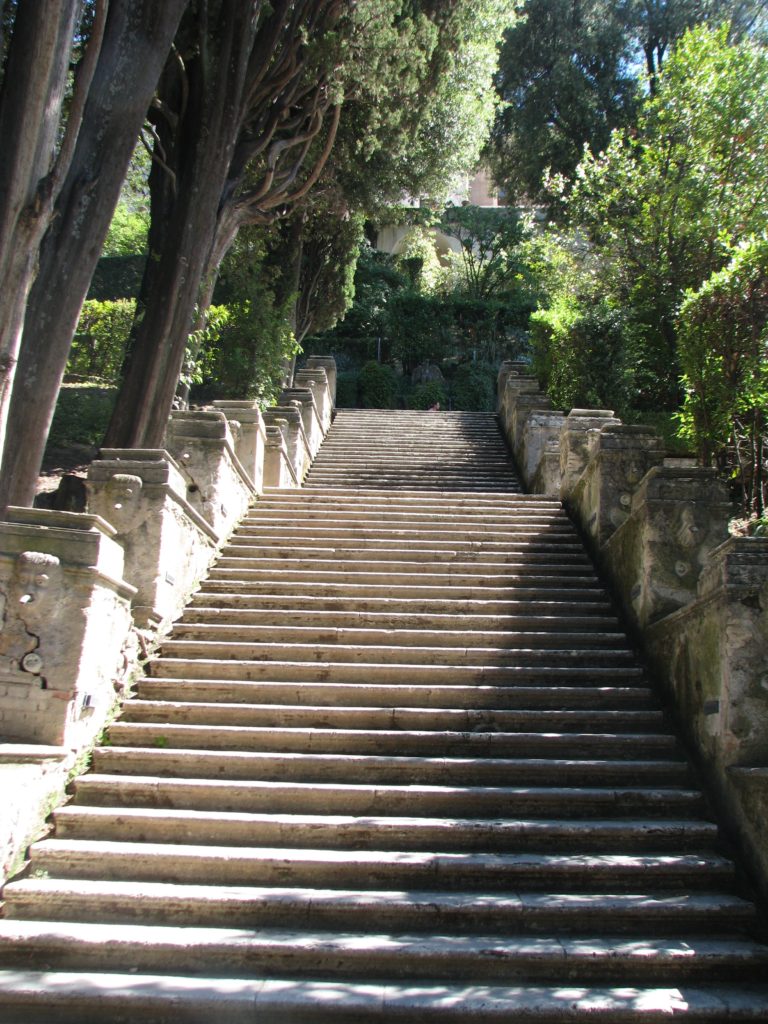
Steps leading up to the villa, Villa d'Este

Steps leading up to the villa

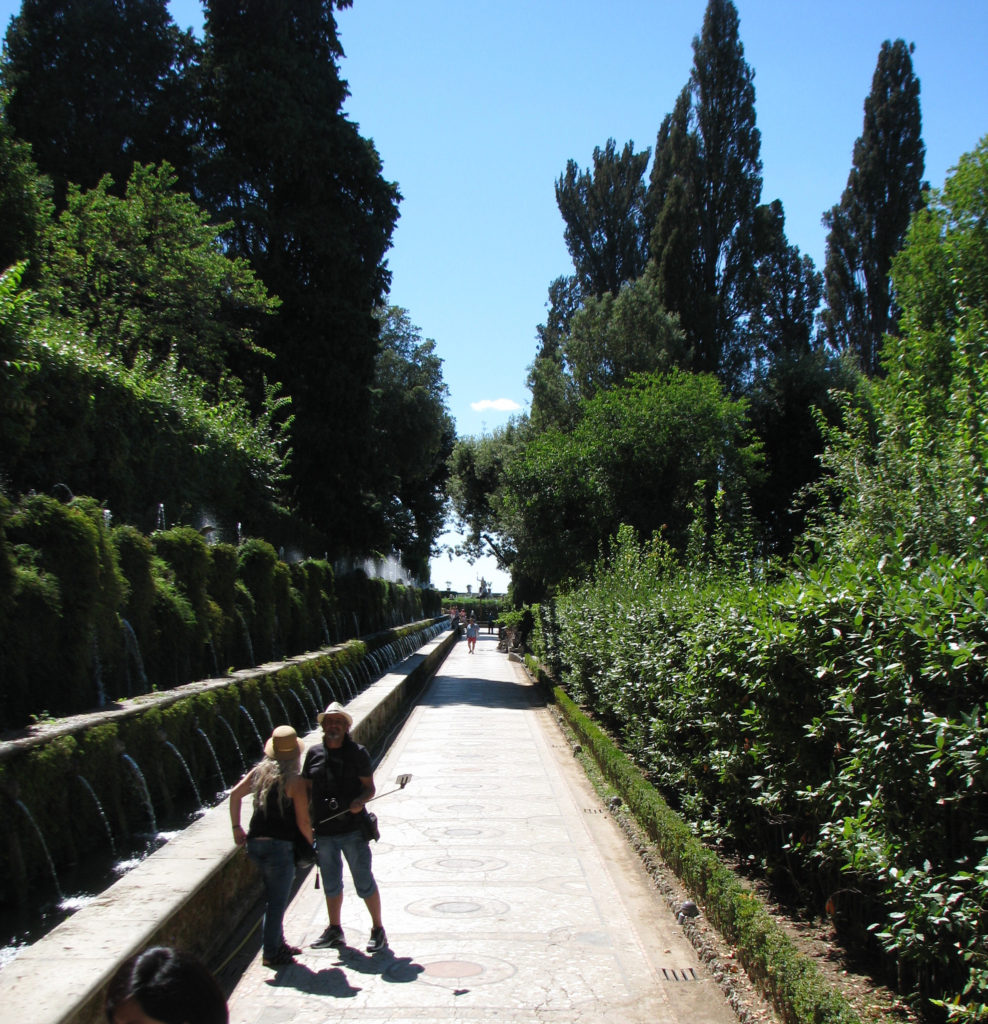
Walking through the gardens, Villa d'Este

Walking through the gardens, Villa d’Este